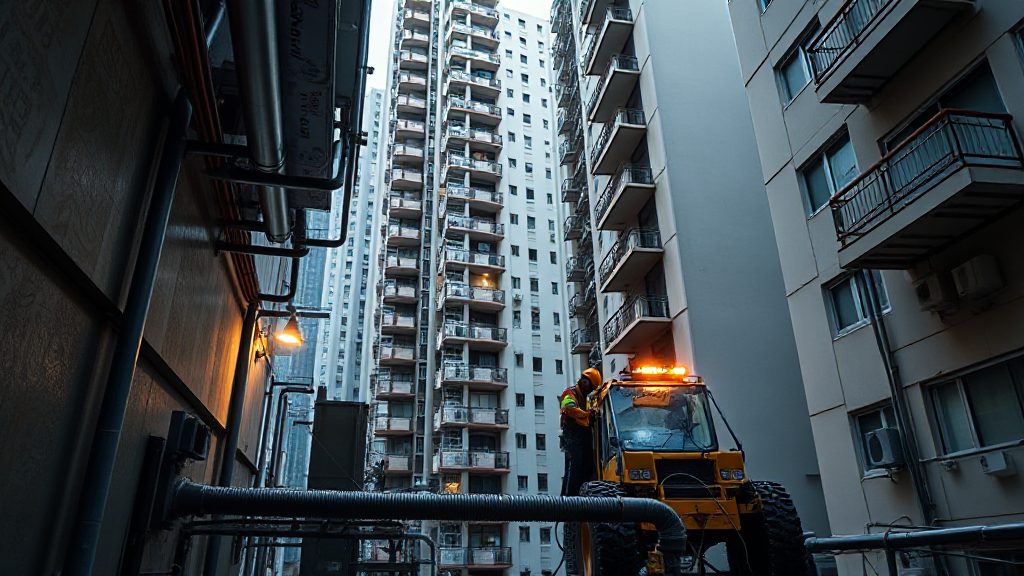
Shared Stacks and Shared Blame in Ipiranga Low-Rise Buildings
Last Tuesday the kitchen sink in apartment 12 stopped draining. By evening the water had climbed back up into the basin, carrying bits of rice and a smell that seemed to come from the walls themselves. Three floors above, nobody noticed anything until the next morning, when a slow drip appeared under a bathroom cabinet. That is the quiet contract of a low-rise building in Ipiranga: your drain is never only yours. If you live in one of these older São Paulo buildings, understanding the shared stack is the difference between a five-minute fix and a week of arguments. For emergencies, a desentupidora Ipiranga São Paulo SP can clear the blockage, but knowing how the system works helps you prevent the next one.
What a Shared Stack Actually Is
A stack is the vertical pipe that carries wastewater from every unit down to the street sewer. In most Ipiranga buildings of three to six floors, there is one main soil stack for toilets and a separate waste stack for sinks and showers, though older constructions sometimes merge them. The stack runs behind the walls, usually in a shaft near the bathrooms, and every apartment connects to it through a branch line.
The key point is that the stack belongs to the building, not to any single apartment. When a branch clogs, the blockage is often just below the point where your pipe meets the vertical column. Water from your sink fills the branch, then backs up into your unit because it has nowhere else to go. The stack itself may be perfectly clear. That distinction matters when you call for help: a technician needs to know whether the problem is local or collective.
In Ipiranga, many low-rise buildings date from the 1960s to the 1980s, when cast iron and galvanized steel were standard. These materials corrode from the inside, narrowing the pipe and creating rough patches where grease and paper catch. A building that has never had its stack inspected may be one flush away from a recurring blockage.
How Venting Keeps the Stack Behaving
Every stack needs air. As wastewater falls, it pushes air ahead of it and pulls air behind it. Without a vent, that pressure difference creates a gurgling sound, a slow drain, or a siphon that empties the water out of your trap and lets sewer gas into the apartment. The vent stack, usually a smaller pipe running up to the roof, equalizes the pressure.
Signs Your Venting Is Compromised
- Gurgling from the sink or shower after a toilet flushes
- A persistent sewer smell in the bathroom even when the drain is clean
- Water in the toilet bowl that rises and falls without being used
- Drains that are slow in several apartments at once
When venting fails, the fix is not always in your unit. A blocked or broken vent on the roof, or a vent pipe disconnected during a renovation, affects every apartment on the stack. A desentupidora Ipiranga can inspect the vent and the stack together, because clearing a drain without restoring airflow only postpones the problem.
Why Low-Rise Buildings Vent Differently
Taller buildings often use a single vent stack with relief vents at intervals. In a four-story Ipiranga building, the vent may be a simple pipe that runs up beside the soil stack and exits above the roof line. If a later owner enclosed a balcony or added a top-floor bathroom, the vent path may have been altered without anyone updating the building’s plumbing drawings. That is one of the most common hidden causes of recurring slow drains in the neighborhood.
How One Clog Travels Through the Building
A blockage rarely stays where it starts. Imagine grease from apartment 12 cooling in the branch line. Water still passes, but slowly. Over weeks, soap scum and food particles collect. One day the branch closes completely, and the sink backs up. The water sits in the branch, and if the branch connects to the stack at a shallow angle, the backup can push into the unit next door through a shared branch fitting.
From there, the pattern depends on the building. In some Ipiranga low-rises, the ground-floor units connect to a horizontal collector before the stack, so a blockage in the collector floods the ground floor first. In others, the stack itself clogs at a bend, and the backup appears on the lowest connected floor. The apartment that sees the water is not necessarily the apartment that caused the problem.
This is why a desentupidora em Ipiranga São Paulo SP often asks to inspect more than one unit. A camera inspection of the stack can show whether the obstruction is a local branch, a bend in the vertical line, or the horizontal connection to the public sewer. Without that view, a technician may clear the visible drain and leave the real cause untouched.
The Role of the Public Sewer Connection
The stack ends at a building sewer that runs under the property to the public network. In older Ipiranga streets, tree roots and settled soil can crack that underground line. When the building sewer is partially blocked, the stack drains slowly, and every apartment on the stack feels it. Root intrusion is a common finding in low-rise buildings with mature street trees, and it is a collective repair, not a single-unit one.
Who Is Responsible When the Stack Backs Up
Responsibility follows the pipe. Inside your apartment, the branch line and fixtures are yours. The stack, the vent, the building sewer, and the connection to the public network are common property, which means the condominium is responsible for their maintenance. In practice, that division is where neighbors stop agreeing.
What the Condo Usually Covers
Most Ipiranga buildings treat the vertical stack and the underground building sewer as collective infrastructure. If a blockage originates there, the cost of clearing and repairing it is shared. The same applies to a damaged vent on the roof or a collapsed section of the building sewer. A qualified desentupidora Ipiranga can document the location of the obstruction, which helps the síndico decide whether the expense is common or individual.
What the Unit Owner Usually Covers
If the blockage is inside your branch line, behind your sink or toilet, the repair is yours. Grease buildup from your kitchen, hair in your shower drain, or an object flushed down the toilet are individual issues. The same is true if a renovation in your unit narrowed or rerouted a pipe without proper approval. The building’s insurance and the condo’s maintenance budget do not normally cover those.
When the Cause Is Unclear
Sometimes the camera shows a blockage at the junction where your branch meets the stack. That is the gray zone. A practical approach is to have the line cleared and inspected, then review the footage together with the síndico. If the obstruction is grease from one unit, the cost is individual. If it is root intrusion or a collapsed stack section, it is collective. Documenting the inspection protects both sides from guesswork.
| Location of blockage | Typical responsibility |
|---|---|
| Inside the apartment branch line | Unit owner |
| Junction at the stack | Reviewed case by case |
| Vertical stack or vent | Condominium |
| Building sewer to public network | Condominium |
Talking to Neighbors Before the Next Backup
The most effective prevention in a low-rise building is a short conversation. Ask the síndico whether the stack has ever been inspected with a camera. If the answer is no, propose a preventive inspection before the rainy season, when infiltration and root growth tend to worsen. A building that knows the condition of its stack can plan maintenance instead of reacting to emergencies.
At the unit level, keep grease out of the kitchen drain, use strainers in showers and sinks, and never flush wipes or paper towels. These habits reduce the load on the shared line. At the building level, schedule periodic hidrojateamento of the stack and building sewer, and keep a simple log of every blockage, including which apartment reported it and what was found. That log turns neighborly suspicion into evidence.
When a backup does happen, call for help early and share the information. Tell the technician which floors are affected, whether the problem is a single fixture or several, and whether there is a smell of sewer gas. That details help the team arrive prepared, and it helps the condo assign responsibility fairly. In a shared stack, the goal is not to find someone to blame. It is to keep the building dry and the neighbors speaking to each other.
Frequently Asked Questions
Why does my sink back up when the apartment above uses water?
That pattern usually points to a blockage in the shared branch or stack below your connection. Water from the upper unit cannot pass, so it rises into the lowest open point, which may be your sink. A camera inspection of the stack confirms the location.
Can I clear a shared stack myself?
You can clear a blockage inside your own branch line with a plunger or hand auger. The stack and building sewer are common property and should be handled by a qualified technician, especially if the blockage recurs or affects several units.
Who pays when the building sewer is blocked by roots?
In most Ipiranga condominiums, the building sewer is collective infrastructure, so the repair is a common expense. The síndico should document the inspection and inform the residents before authorizing the work.
How often should a low-rise building inspect its stack?
A preventive camera inspection every two to three years is a reasonable baseline for older buildings. Buildings with mature trees near the sewer line or a history of backups may need annual checks.